Monolithic vs Microservices Architecture Which One Should You Choose?
Published on Sep 8 months ago · By FlipCode Team
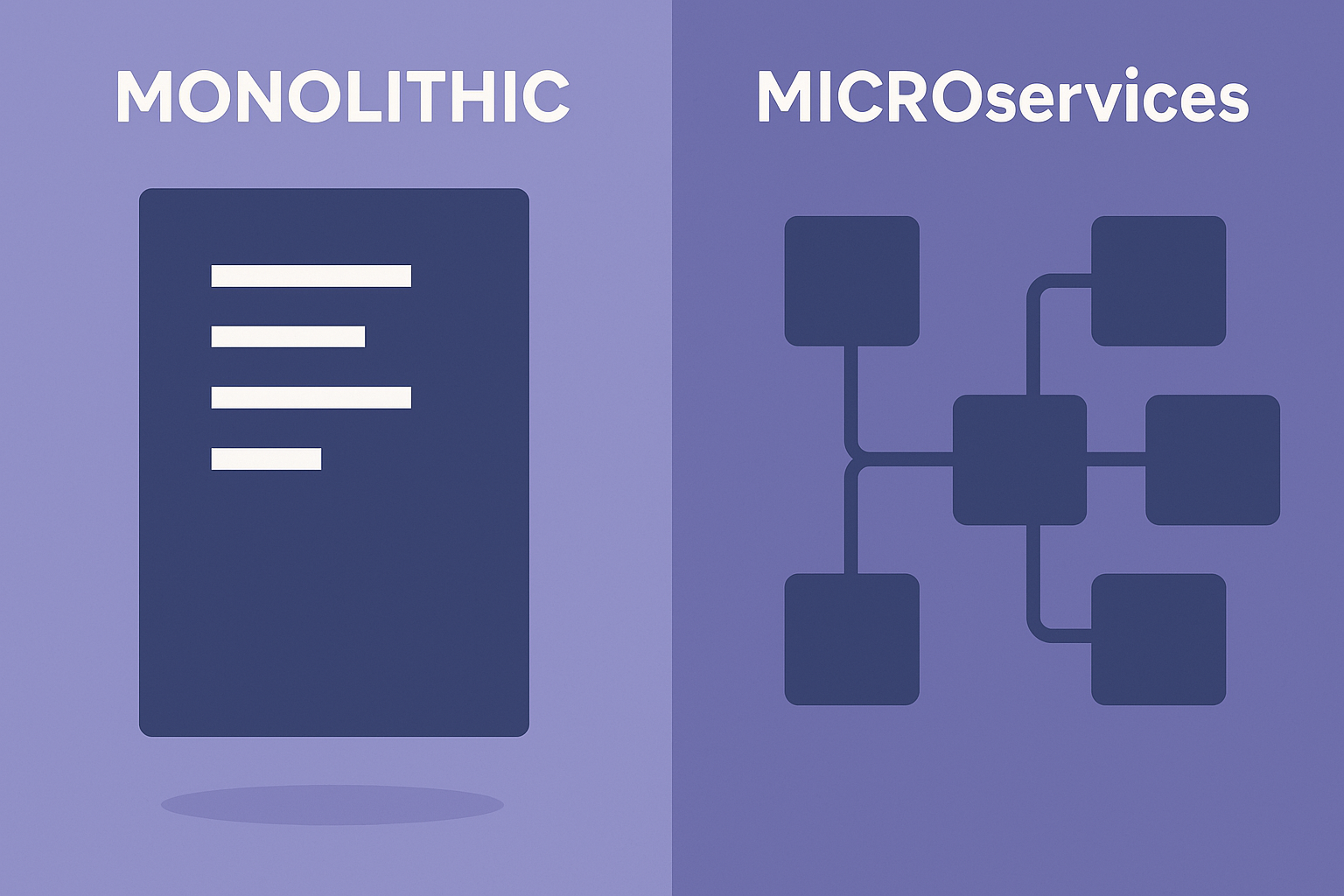
When developing software applications, choosing the right architecture is crucial for scalability, maintainability, and performance. Two popular architectural styles are monolithic and microservices. Monolithic architecture involves a single unified codebase, while microservices architecture breaks an application into smaller, independent services. In this blog, we’ll compare monolithic and microservices architectures to help you decide which is best for your project. A monolithic architecture is a traditional software development approach where the entire application is built as a single, unified unit. All components, including UI, business logic, and database operations, are tightly integrated. Microservices architecture is a modern approach where an application is divided into smaller, independent services that communicate via APIs. Each microservice is responsible for a specific function and can be developed, deployed, and scaled independently. Feature Monolithic Architecture Microservices Architecture Codebase Single, unified application Multiple independent services Scalability Limited, scales as a whole High, scales individual services Deployment Entire application deployed together Services deployed independently Technology Stack Single tech stack Multiple tech stacks possible Fault Isolation Failure affects the entire application Failure is isolated to a single service Complexity Easier to develop and manage More complex due to service communication Best for Small to medium apps Large, scalable applications Choosing between monolithic and microservices architecture depends on your application’s complexity, scalability needs, and team size. If you’re developing a small-to-medium-sized application with simpler requirements, a monolithic architecture is easier to manage and deploy. However, if you need a highly scalable, flexible, and fault-tolerant system, microservices offer the best solution. For startups and businesses in the early stages, monolithic architecture is often the best choice. As the application grows, transitioning to microservices can help scale efficiently. Ultimately, selecting the right architecture depends on your project’s requirements, future scalability, and operational complexity. Introduction
What is Monolithic Architecture?
Advantages of Monolithic Architecture
When to Use Monolithic Architecture
What is Microservices Architecture?
Advantages of Microservices Architecture
When to Use Microservices Architecture
Key Differences Between Monolithic and Microservices
Conclusion